






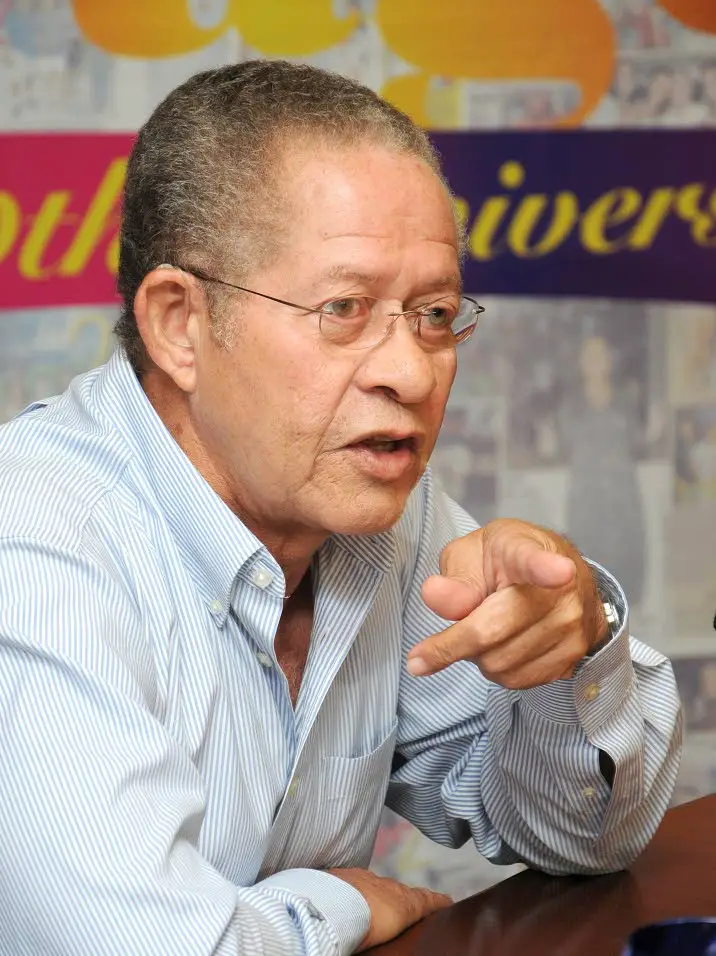
ORMER Prime Minister Bruce Golding on Saturday night expressed hope that the United States would soften the tone of its relationship with Jamaica and rekindle the strong, decades-old bond of ties between both nations as current demands made by Washington are at odds with the very essence of true friendship.
Golding delivered the message in an address to the Jamaica 64th Independence Gala staged by Team Jamaica Bickle in Philadelphia, during which he juxtaposed impressive economic and social gains in the island over the past few years with what he described as “an even more pressing and unnecessary challenge at this time” created by a global order that has “become topsy-turvy”.“How we live, how we govern ourselves, how we progress is determined, to a great extent, by the environment in which we live and how we are able to operate within that environment. That environment has always been challenging, testing our mettle and fortitude. We went through 45 years of the Cold War when we became the bully beef in the sandwich that the two superpowers were fighting over, but I have never witnessed anything like what we are facing now,” said Golding, who served as Jamaica’s eighth prime minister from September 2007 to October 2011.
He argued that established rules are being discarded and “new rules are being handed down, not after discussions and negotiations, but unilaterally by social media postings at 2:30 in the morning when most of us are asleep”.
“The long discredited Monroe doctrine has been reincarnated. New tariffs were imposed last year on our exports to America, although America enjoys a huge trade surplus with us. What we export to the United States is less than a quarter of what we import from them,” Golding stated.
He pointed to the discontinuation of the Cuban medical mission programme, America’s fierce opposition to China’s investments in Jamaica, and the highly controversial third-country nationals arrangement between the US and a number of Caribbean countries as examples of action that run counter to harmonious relations.“True friends don’t abuse your friendship; they don’t make unreasonable demands of you; they should be there to help you. Holding a gun to our head and insisting that we must be reasonable and do things your way is not friendship. The United States has put us under severe stress — that’s not what friends are for,” Golding told his audience.
“There are many at home and abroad who are outraged at what is taking place, who are incensed at the bullying being meted out to us, who are angry that we have not pushed back, that we haven’t stood up like President [Luiz Inacio] Lula [da Silva] who declared that ‘Brazil’s destiny is for Brazilians alone to determine — without foreign interference or subservience,’ ” Golding said.
“But we must pause for a moment to understand who we are and the pickle we are in. Brazil is a large country and provides a US$57-billion market for American exports. We are not in that league. We struggle to find markets for our goods. The US market accounts for a half of our total exports. If our exports to the US were slapped with a 50 per cent tariff, our manufacturing sector would fall apart and thousands of persons would lose their jobs,” Golding pointed out.
“An airline ticket from Philadelphia to Montego Bay attracts federal taxes of around US$65. Bear in mind that the US accounts for 70 per cent of the tourists who come to Jamaica. If that ticket were slapped with an additional tax of US$200, do you understand what that would do to our tourism industry that is so vital to our economy?” Golding posited.